About the journal
Why We Read Landscapes
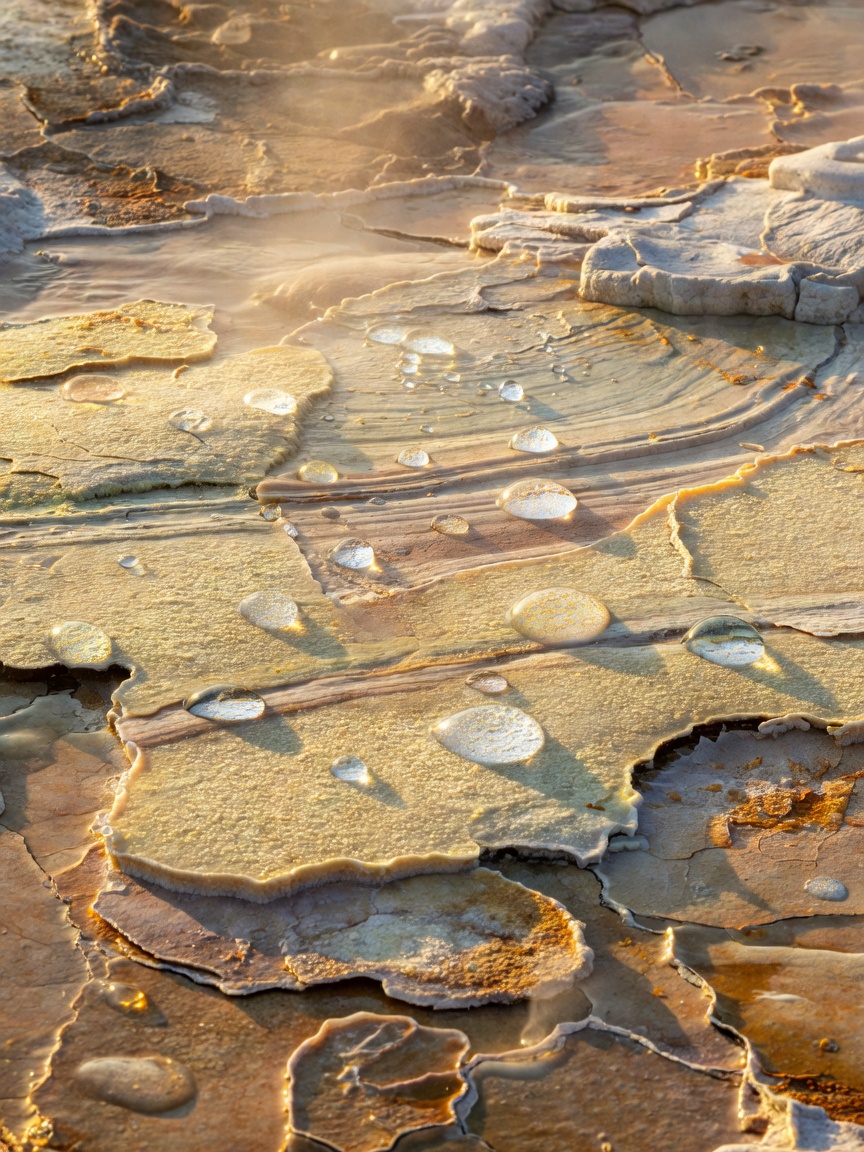
We begin with what a traveller can see: steam at a crack, a line of mineral, a rough flow edge, a trail cut through old stone.
Our purpose is to make those encounters more legible without confusing a geological explanation with permission to approach.
A journal organised by clues
Crewblomarblekisk.garden is an independent, informative field journal about volcanic geothermal landscapes. We connect geothermal fields, volcanic formations, natural springs and geological trails through visible clues rather than a directory of destinations. The aim is not to hurry a reader from one famous viewpoint to another. It is to help travellers notice how heat, water, rock and time shape the scene.
Our editorial voice is observant and practical. We describe what might be seen, explain the processes that can produce it, and distinguish general geological information from information that must be checked locally. A fumarole remains a geological feature; its safe viewing distance is set by the site’s current management. A hot spring may be a protected natural feature or a managed bathing facility. A beautiful view does not tell you whether it is open.
Observation is not certainty
Field interpretation benefits from precise language. We try to separate direct observation—such as the colour, texture, shape or position of a feature—from a scientific interpretation of how it formed. We do not treat a photograph as a substitute for expert analysis, and we avoid turning a mineral colour into a definitive identification. Where the evidence is incomplete, uncertainty belongs in the explanation.
Real landscapes also carry more than geological meaning. Many are lived-in places, protected environments or sites with cultural histories and responsibilities. Local communities, land managers and cultural custodians have a role that cannot be replaced by an outsider’s scenic description. Visitors should read posted protocols, respect restricted areas and listen to site-specific guidance.
Practical access can change
This site is not a live travel alert service, booking directory or substitute for park and operator information. Trail access, transport, opening times, services, prices and bathing availability can change with weather, maintenance, conservation work, volcanic activity and local policy. We direct readers to current official sources for those details rather than presenting old information as permanent.
Our guides discuss Yellowstone, Haukadalur, Rotorua, Beppu, Pamukkale, Hawaiʻi Volcanoes National Park, Vesuvius, Santorini, Etna, Þingvellir, the Giant’s Causeway, Staffa and other landscapes as context for reading geological clues. The places differ in geology, access and cultural setting. A lesson from one site should not be treated as a rule for another.
What we hope a reader carries
Carry curiosity, a careful eye and a willingness to leave features undisturbed. Use established paths, stay behind barriers, avoid touching mineral deposits or testing water, and check current instructions before setting out. Record uncertainty honestly. A small note about how a terrace edge meets a slope can be more valuable than a hurried photograph from beyond a fence.
The site is published by Crewblomarblekisk Journeys Ltd. Our company details and contact route appear below and on the Contact page. To suggest a topic or share a question, use the field-note composer; it prepares a message for you to copy or download and does not submit it automatically.
Look closely. Interpret carefully. Leave the ground as you found it.
For answers to practical questions, see Before You Follow the Steam. To explore the guides, begin with geothermal fields, volcanic landforms, natural springs or geological trails.