Field questions / Practical notes
Before You Follow the Steam
The view may look calm. The ground may be thin, hot, protected or closed. These answers begin with curiosity and end with the local guidance that matters today.
Can I bathe in every hot spring?
No. Many springs are too hot, chemically unsuitable, ecologically sensitive or culturally protected. Use only places officially designated and currently open for bathing, and follow the operator’s rules.
Is clear geothermal water safe to touch?
Appearance is not a safety test. Water can be scalding or contain dissolved substances that make contact unsuitable. Do not touch, taste or enter natural features unless the responsible authority explicitly designates a managed bathing area.
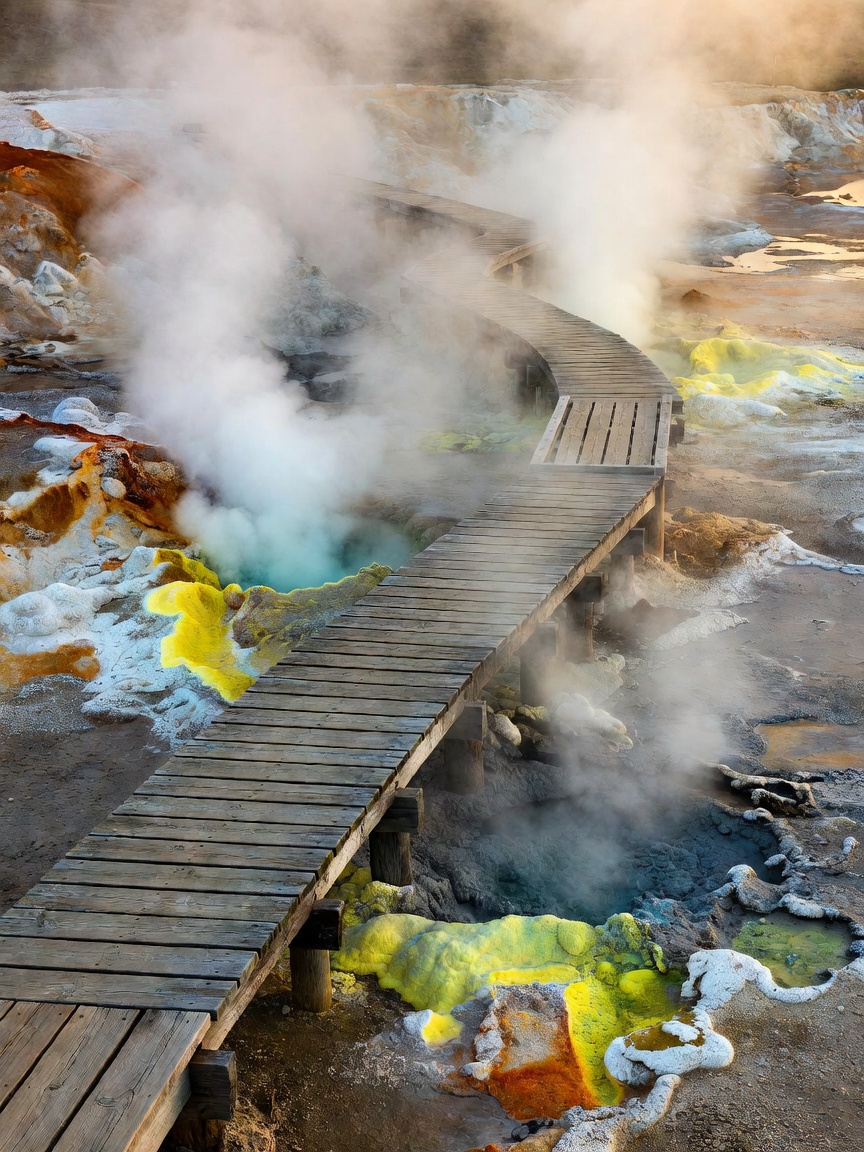
Why should I stay on the boardwalk?
Thin mineral crust can conceal boiling water or unstable ground. Boardwalks also protect fragile deposits and microbial communities. Stay on marked routes even when a surface looks solid or a closer viewpoint seems tempting.
Can colour identify a mineral?
Colour can suggest questions, but it cannot reliably identify a deposit by itself. Lighting, water depth, iron minerals, sulphur compounds and microorganisms all affect appearance. Use trusted site interpretation and avoid presenting a visual guess as a confirmed identification.
When is the best time to visit a geyser?
Timing depends on the site, season, weather and current access. Some features erupt unpredictably, even if historical intervals are known. Consult the official park or site information and treat any estimated timing as an observation rather than a promise.
Are trail and facility details current here?
No. Geological processes are described for general learning, but access, opening hours, transport, prices, closures and services can change. Check the current official information from the land manager, operator or relevant authority before setting out.
What should I bring to a volcanic trail?
Match water, layers, footwear and sun or weather protection to the route and forecast. Review elevation, trail surface and duration using official information. Carry any required navigation or emergency equipment and choose a route appropriate to your experience.
May I collect rocks or mineral samples?
Do not remove material from parks, protected land or sites where collecting is restricted. Local rules vary, and small samples can damage fragile features or remove important context. A photograph, sketch and written observation make a responsible record.
Can I use a drone or tripod?
Rules differ between parks, countries and facilities. Check the site’s current regulations before using either, and never operate equipment in a way that crosses barriers, disturbs wildlife or compromises visitor safety.
How can I share a field observation?
Use the field-note composer on our Contact page. It creates a plain-text message on your device that you can copy or download. It does not send or submit the note.