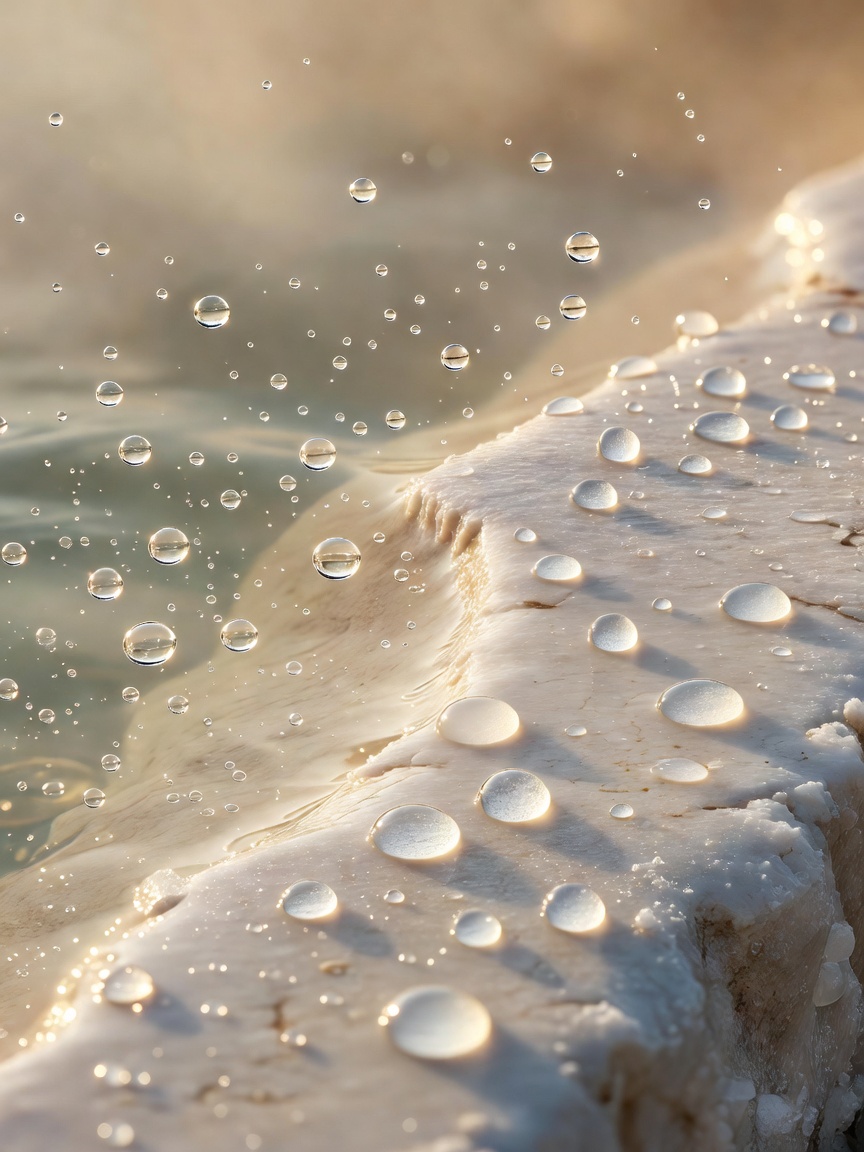
A hot spring begins with a journey. Water descends through cracks or porous rock, warms underground, and returns to the surface. The heat may come from a volcanic system, hot rocks at depth or the normal increase in temperature with depth in Earth’s crust. Circulation time, rock type, dissolved gases and surface conditions all influence the spring that visitors see.
One word, several kinds of place
“Hot spring” describes naturally heated groundwater reaching the surface, but it does not describe how a site is managed. Some springs are untouched natural features, protected for their geological or ecological value. Some are viewed from boardwalks and platforms. Some feed purpose-built bathing pools, with water managed by an operator. Others are culturally significant places where visitor behaviour is guided by local protocol. These categories should not be blurred together.
Temperature can vary within a single spring and change over time. Clear water is not a safety test. Mineral content, acidity, microorganisms and temperature may be unsuitable for contact or drinking. A spring can be scalding below a cool-looking surface, and a thin crust around it can collapse. Do not test water with a hand, taste it or enter a pool that is not officially designated and open for bathing.
Where bathing is permitted, follow the facility’s rules, including limits on access, hygiene, children, food, photography and time in the water. Check whether the site provides changing facilities, accessibility information and current opening details. Natural conditions and managed facilities can coexist, but one should not be mistaken for the other.
A spring is not a bath by default. It is a place where the underground world becomes visible at the surface.
Minerals leave a margin
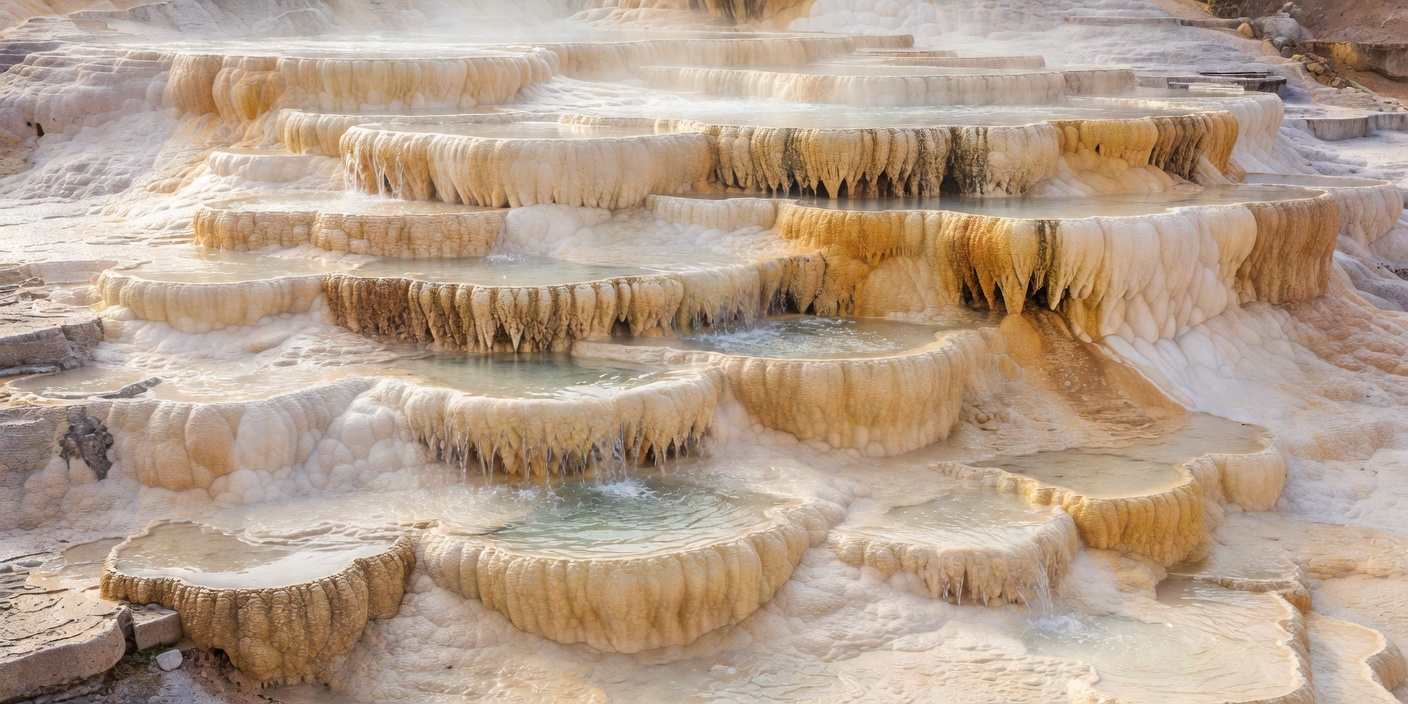
As hot water cools, it can lose dissolved minerals and deposit them around the spring. Silica-rich water may form sinter; carbonate-rich water can build travertine. The precise mineral assemblage depends on water chemistry and local geology. A terrace edge, mound or pale rim records movement and deposition, but it may be delicate enough to break under a single careless step.
Yellow, rust, cream and green tones make for memorable photographs, but colour is not a reliable field identification on its own. Iron minerals, sulphur compounds and microorganisms can contribute to the visual pattern, with lighting and water depth changing how the colours appear. A site’s interpretive panel or geological publication may provide context; avoid stating a definitive identification from a snapshot.
Thermophilic microorganisms thrive in some warm environments and can form colourful mats. Their presence is part of the ecosystem, not decoration. In Yellowstone, hot-spring systems and microbial communities have long drawn scientific interest. At Mammoth Hot Springs, terrace forms and water paths continually evolve. Keep to boardwalks and preserve distance from water and deposits; even a small footprint can alter a fragile edge.
Places with distinct traditions
Iceland’s Blue Lagoon is a managed bathing facility in a volcanic region, not a simple invitation to enter any nearby geothermal water. Its setting, services, admission arrangements and operating conditions are specific to the operator and may change. Nearby geothermal infrastructure and natural features have their own rules. Always check current official information and do not wander beyond marked areas to seek a less regulated pool.
Japan’s Beppu is known for thermal waters and its “hells,” or jigoku: geothermal features intended primarily for viewing rather than bathing. The distinction is useful because a hot spring town can contain both bathing facilities and intensely hot display features. In Rotorua, New Zealand, geothermal landscapes and bathing experiences exist alongside Māori histories and living cultural relationships. Respect site-specific protocols, signs and the guidance of local hosts.
At Pamukkale in Türkiye, pale travertine terraces are a famous landscape and protected heritage setting. Visitor access is managed to conserve the formations; follow current rules about routes, footwear and which areas may be entered. The ancient city of Hierapolis sits above the terraces, connecting geological processes with a long human history of visiting thermal water. The visual appeal should never obscure conservation requirements.
In the United States, Hot Springs National Park in Arkansas combines thermal water with a historic built landscape. The springs emerge in a setting where water use, public access and bathing facilities have been shaped by engineering and management. Here, it is especially useful to separate the natural source from the constructed experience. Check the National Park Service and individual facilities for current access details.
Bathing, ecology and local meaning
Bathing in thermal water has cultural histories that differ from place to place. A visitor should not assume that customs, clothing, photography or etiquette are interchangeable. At Japanese onsen, for example, bathing etiquette is part of the experience, and each establishment may have its own instructions. In other places, bathing may be restricted or inappropriate because of ecological sensitivity, cultural significance or water quality.
Facility conditions can also change. Maintenance, water monitoring, weather, staffing, capacity and local regulations influence whether a managed pool is open. A feature that appears in a guidebook as a bathing place may close temporarily or permanently. Confirm information with the operator or relevant authority on the day of travel. This journal cannot report live openings, prices or water conditions.
A responsible spring visit
Before going, identify who manages the site and read the current official visitor information. Find out whether bathing is explicitly permitted, what access is provided and which sections are closed. Respect barriers, posted cultural guidance and limits on photography. Carry out all litter and avoid soaps, oils or other substances that can affect water and ecosystems.
On site, notice the flow direction, the shape of deposits and the relationship between spring, slope and nearby stream. Observe without touching. If you are visiting a bathing facility, use only its designated pools and follow its posted health and safety advice. If you are visiting a natural feature, keep it a landscape to read rather than a pool to enter.
That distinction protects visitors as well as the spring. Geological beauty does not guarantee safe contact, and a bathing tradition does not make every neighbouring feature suitable for bathing. Ask where the water comes from, who cares for the place and what the rules are today. The most meaningful encounter is one that leaves the spring unchanged.
Keep the observation, not a sample
Make a note of the setting: rock type if identified by reliable interpretation, visible deposits, weather, sound and the flow’s direction. Record uncertainty honestly. “Cream-coloured terrace beside warm water” is a useful observation; “safe mineral bath” is a claim that requires evidence from the people responsible for the site. A photograph and careful description are enough to carry the memory onward.